
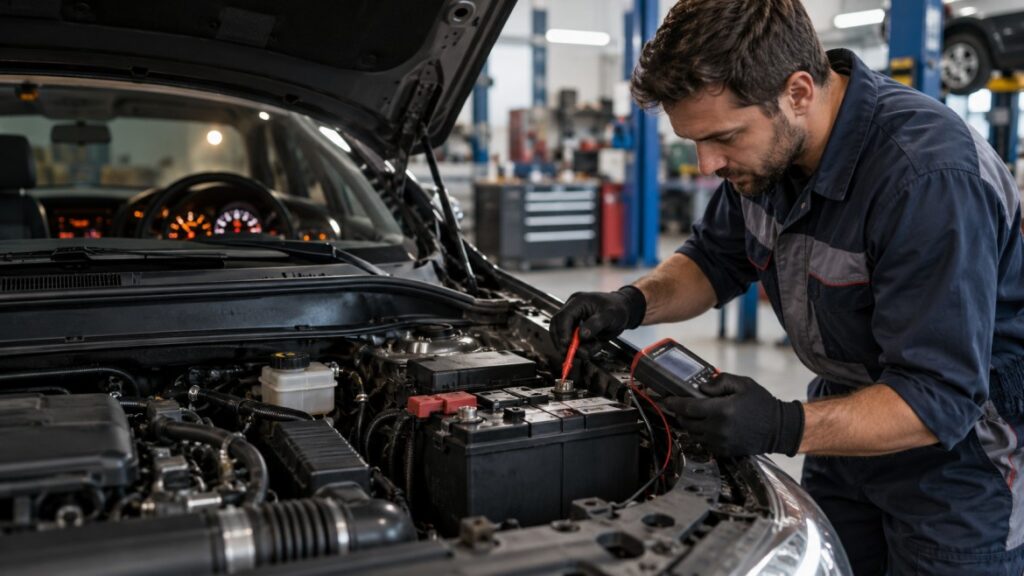
A car battery plays an important role in starting your vehicle and keeping its electrical systems working properly. However, like other vehicle components, batteries have a limited lifespan and gradually lose their ability to hold a charge. Regular maintenance and timely inspections by a mechanic in Mordialloc can help identify battery problems before they leave you stranded. Including battery checks during your car service in Mordialloc can also help you understand its condition and remaining performance. Knowing how long a battery usually lasts, what affects its lifespan and the early warning signs of failure can help you avoid unexpected breakdowns and costly inconvenience.
How Long Does a Car Battery Usually Last?
Most conventional 12-volt car batteries last approximately three to five years, although their actual lifespan depends on the vehicle, driving habits, weather conditions and maintenance. Some batteries may last longer, while others can fail earlier due to frequent short journeys, electrical faults or prolonged periods without use.
A battery’s primary responsibility is to provide the electrical power needed to start the engine. Once the engine is running, the alternator generally supplies electricity to the vehicle’s systems and recharges the battery.
Over time, chemical changes inside the battery reduce its ability to store and deliver energy. This natural ageing process makes starting the engine more difficult, particularly during colder weather.
Drivers who regularly travel short distances may experience faster battery deterioration because the alternator may not have enough time to restore the energy used during starting.
Vehicles equipped with start-stop technology and numerous electronic features may also require specialised batteries designed to manage higher electrical demands.
The age of a battery alone does not determine whether it needs replacing. Professional testing can provide a clearer picture of its condition.
7 Warning Signs Your Car Battery Needs Replacement
Car batteries rarely fail at a convenient time. Some develop noticeable symptoms over several weeks, while others stop working with little warning. Recognising changes in your vehicle’s starting behaviour and electrical performance can help you arrange an inspection before a complete failure occurs.
1. Your Engine Takes Longer Than Usual to Start
A slow engine start is one of the most common signs of a weakening battery. When you turn the ignition key or press the start button, the engine may crank more slowly than normal before starting.
This happens when the battery cannot deliver sufficient electrical power to the starter motor. The problem may become more noticeable during cold mornings or after the vehicle has been parked overnight.
Occasional starting difficulties can also result from a faulty starter motor, poor electrical connections or charging system problems. A battery test helps identify whether the battery is responsible.
Ignoring repeated slow starts increases the possibility of the vehicle eventually failing to start.
2. Your Headlights Become Dim or Flicker
The battery helps provide a stable supply of electricity when the engine is off and supports the vehicle’s electrical system when needed. A weakening battery may cause noticeable changes in lighting performance.
For example, headlights might appear dimmer before the engine starts, or interior lights may become unusually weak when several electrical accessories are operating.
Flickering lights while driving may also indicate a problem with the alternator, wiring or voltage regulation rather than the battery itself.
Pay attention to changes in lighting brightness, especially when combined with slow engine starting or other electrical issues.
A qualified automotive technician can inspect the battery and charging system to determine the cause.
3. You Hear a Clicking Sound When Starting the Car
A clicking noise when turning the ignition can indicate that the starter system is not receiving enough electrical power.
In some cases, the dashboard lights may illuminate normally, but the engine will not crank. You might hear repeated clicking sounds or a single click when attempting to start the vehicle.
A discharged or deteriorating battery is a common cause, although loose battery terminals, faulty starter components and electrical connection problems can produce similar symptoms.
Repeatedly attempting to start the engine without identifying the issue may place unnecessary strain on the starting system.
If your car struggles to start and produces clicking noises, arrange a battery and starter system inspection rather than assuming the battery is the only problem.
4. Your Dashboard Displays a Battery Warning Light
Modern vehicles use dashboard warning indicators to alert drivers to potential electrical and mechanical problems.
The battery-shaped warning light commonly indicates a fault in the charging system. It does not necessarily mean the battery itself needs replacing.
Possible causes include a faulty alternator, damaged wiring, poor electrical connections or issues with the charging control system.
If the light remains illuminated while driving, the vehicle may be operating on stored battery power without receiving sufficient charging.
Electrical systems may eventually stop functioning if the problem continues.
A charging system warning deserves prompt attention. If the light appears while driving, reduce unnecessary electrical use and arrange a safe inspection as soon as possible.
5. Your Battery Case Appears Swollen or Damaged
Visible changes to the battery case can indicate that something is wrong.
A battery exposed to excessive heat, overcharging or internal failure may develop swelling, cracking or other physical damage.
High temperatures can accelerate chemical deterioration and contribute to battery problems, particularly when a vehicle is regularly parked outdoors.
During a visual inspection, a technician may check for damage, leakage and corrosion around the terminals.
A swollen or leaking battery should not be handled casually because it may contain corrosive electrolyte and present safety risks.
If you notice unusual swelling, cracks or leakage, avoid touching the affected area and arrange professional assistance.
6. Your Car’s Electrical Accessories Behave Unusually
Modern vehicles rely on electrical power for many everyday functions, including power windows, central locking, infotainment systems and dashboard displays.
When a battery becomes weak, some electrical features may operate inconsistently, particularly when the engine is switched off.
You may notice slower power-window movement, reduced interior lighting brightness or electronic systems behaving unexpectedly.
However, these symptoms do not always indicate battery failure. Wiring faults, control module problems and charging system issues may produce similar behaviour.
Professional diagnostics can help separate battery-related concerns from other electrical faults.
Regular vehicle maintenance, including a scheduled logbook service, provides an opportunity to discuss unusual electrical behaviour and arrange appropriate testing when required.
7. Your Battery Is More Than Three Years Old
Battery age is an important factor when assessing reliability.
While many batteries remain functional beyond three years, their performance may gradually decline as they approach the end of their expected lifespan.
Drivers often forget when their battery was installed, particularly when purchasing a used vehicle.
Checking the battery’s date label, installation records or previous service invoices may help establish its approximate age.
A battery that is three years old does not automatically require replacement. However, periodic testing becomes increasingly useful as it ages.
If an older battery also shows slow starting, poor charge retention or repeated failures, replacement may be the most practical option.
What Causes Car Batteries to Wear Out Faster?
Several everyday driving habits and environmental conditions can shorten battery life.
Frequent short journeys: Starting a car uses a significant amount of energy. Repeated short trips may not give the charging system enough time to replenish it.
Leaving electrical accessories switched on: Interior lights, headlights and other accessories can drain a battery when the engine is off.
Extreme temperatures: Hot weather can accelerate battery deterioration, while cold conditions reduce the available starting performance of an already weakened battery.
Long periods without driving: Batteries naturally lose charge over time. Vehicles left unused for extended periods may develop a deeply discharged battery.
Faulty charging systems: An alternator or charging control problem can prevent the battery from receiving the correct charge.
Poor connections: Loose or corroded terminals can interrupt electrical flow and lead to starting problems.
Other vehicle maintenance requirements should also receive attention. Services such as brakes repairs, suspension inspections and general mechanical checks help identify issues affecting vehicle safety and performance, even though they do not directly extend battery life.
How Can You Make Your Car Battery Last Longer?
A few simple maintenance habits can help protect your battery and reduce unnecessary strain on the electrical system.
Start by driving your vehicle regularly. Longer journeys allow the charging system more opportunity to replenish the battery after starting. However, driving alone may not fully recharge a heavily discharged battery.
Avoid leaving headlights, interior lights or other electrical accessories operating when the engine is switched off.
Keep an eye on changes in starting performance, especially during winter or after extended periods without driving.
Battery terminals should remain clean, secure and free from excessive corrosion. Any cleaning or electrical work should be carried out safely and according to the manufacturer’s instructions.
For vehicles that remain parked for several weeks, a compatible battery maintainer may help preserve charge. This is particularly useful for secondary vehicles that are not driven every day.
Routine inspections can also identify battery deterioration early. During a vehicle maintenance appointment, ask whether battery testing is appropriate for your car’s age and operating conditions.
Should You Recharge or Replace a Weak Car Battery?
A weak battery does not always need immediate replacement.
If the battery has discharged because the headlights were accidentally left on or the vehicle remained unused for an extended period, recharging may restore its performance.
However, a battery that repeatedly loses charge despite normal driving may have reduced capacity or an underlying electrical problem.
A technician can perform several checks to assess its condition, including:
- Measuring battery voltage and state of charge.
- Testing available starting performance.
- Checking battery terminals and connections.
- Inspecting the alternator and charging system.
- Investigating excessive electrical drain when the vehicle is parked.
If the battery is healthy but discharged, recharging and correcting the cause may be sufficient.
If testing confirms substantial deterioration or internal damage, replacement is generally the more reliable solution.
The correct battery specification is also important. Some modern vehicles require AGM or EFB batteries, and certain models need battery registration or electronic system configuration after replacement.
Why Regular Vehicle Maintenance Still Matters
Battery condition is only one part of overall vehicle reliability. A properly maintained vehicle is less likely to experience unexpected mechanical problems that interrupt everyday driving.
Routine servicing allows technicians to inspect essential components, identify developing faults and recommend maintenance based on the manufacturer’s requirements.
During a scheduled inspection, attention may also be given to tyres, fluid levels, brakes, suspension and other safety-related components.
For motorists preparing to sell or re-register a vehicle in Victoria, a roadworthy certificate inspection assesses prescribed vehicle safety and compliance items. It is not a complete mechanical health check or a substitute for battery testing.
Tyre maintenance is another important consideration. Choosing suitable tyres through professional tyre sales services can support handling and driving performance, while timely tyre replacement is essential when tread depth, wear or damage makes continued use unsafe.
For European vehicle owners, electrical systems and battery management requirements can be more complex. Drivers arranging Audi service, BMW service or Mercedes service should ensure battery testing and replacement follow the relevant manufacturer’s specifications.
Although battery care is important, maintaining the whole vehicle contributes to a more dependable driving experience.
Keep Your Car Starting Reliably with Continental Mordialloc
A healthy battery is essential for dependable engine starting and everyday vehicle operation. Recognising warning signs such as slow starting, dim headlights, electrical problems and repeated battery discharge can help you address faults before they cause a breakdown.
Continental Mordialloc provides battery testing, replacement and general automotive servicing for motorists in Mordialloc, Mentone, Parkdale, Moorabbin, Aspendale and surrounding suburbs. Whether your battery is approaching the end of its expected lifespan or your vehicle has developed starting problems, the workshop can inspect the issue and recommend a suitable solution.
Visit the team at 23 Boundary Road, Mordialloc VIC 3195, or call 03 9590 9669 to arrange a battery inspection or replacement.
Book your battery check today and keep your vehicle ready for the road ahead.